Project Overview
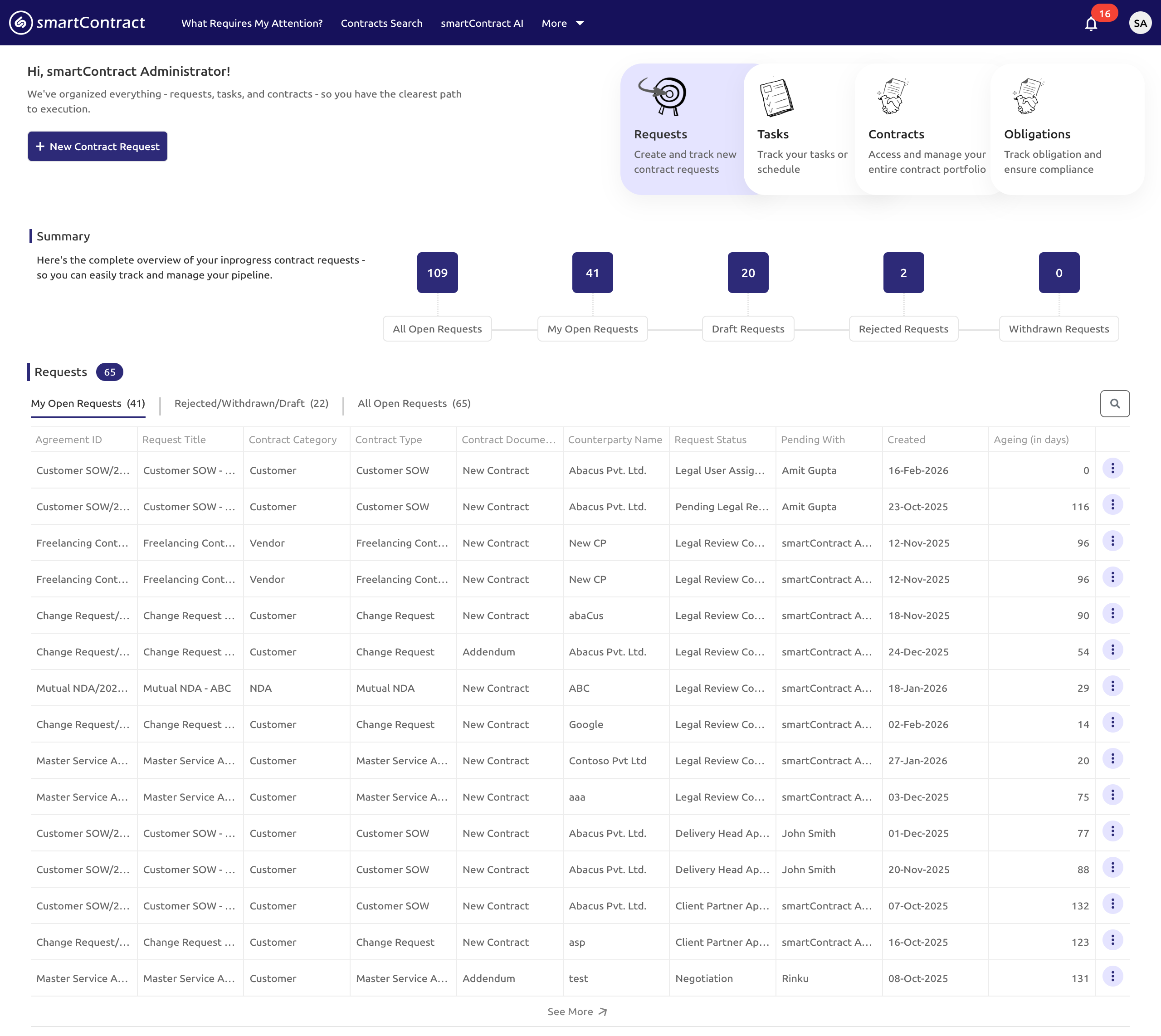
Context + ProblemThe smartContract CLM platform is an enterprise-grade web application designed to transform traditional contract management into a more structured governance system.
Organizations often treat contracts as static documents stored across disconnected tools. This leads to poor visibility, delayed approvals, compliance risk, and missed obligations.
This project focused on designing a centralized Contract Lifecycle Management (CLM) system that enables organizations to manage contracts as dynamic workflows — improving transparency, accountability, and operational efficiency.
Objective
Design GoalsDesign a scalable contract lifecycle platform that:
Design Approach
ProcessEmpathize — Understand enterprise workflows and stakeholder roles.
Define — Identify governance and lifecycle challenges.
Ideate — Explore workflow-first design solutions.
Prototype — Create structured enterprise interaction flows.
Validate — Review with users and business teams.
Enterprise CLM design works best when the product is framed as a workflow system, not just a document repository. That shift improves clarity, scalability, and adoption.
User Ecosystem
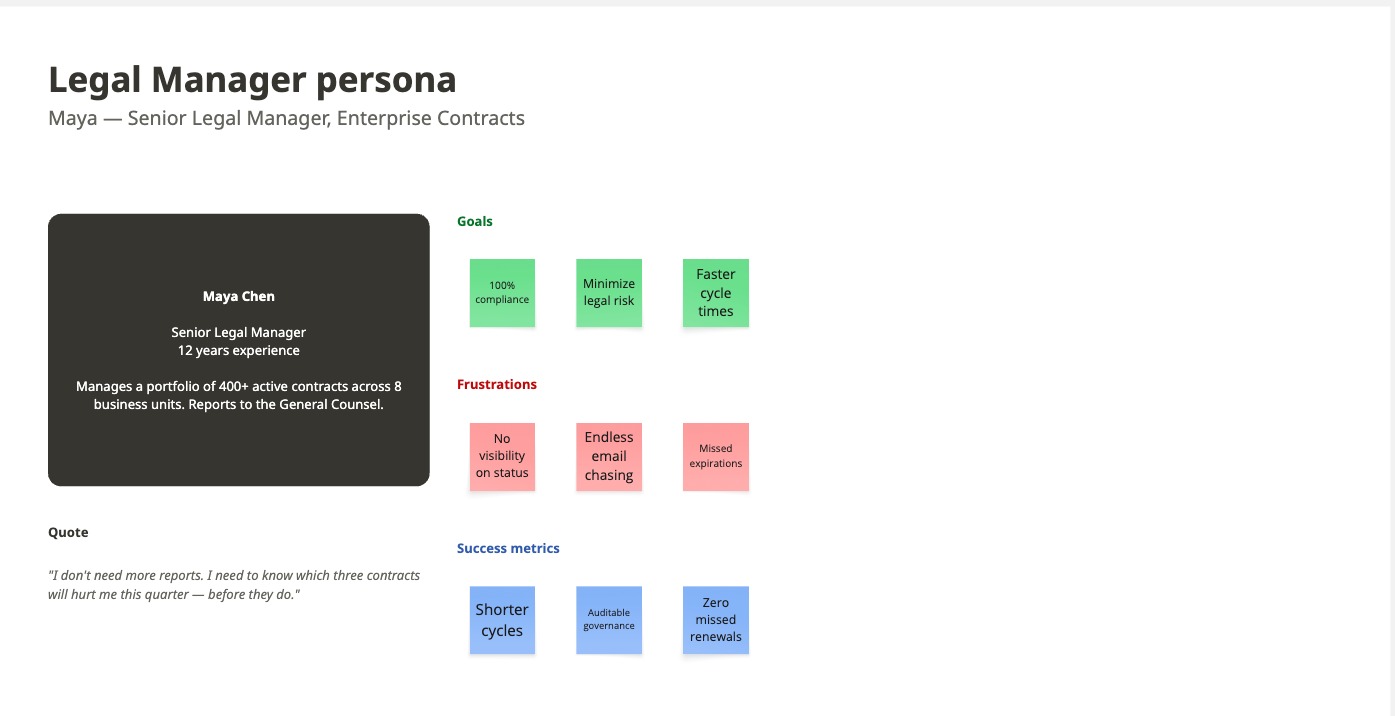
StakeholdersLegal Managers
- Maintain compliance
- Review and approve contracts
- Monitor risk exposure
Procurement Teams
- Manage vendor agreements
- Track contract milestones
- Coordinate review cycles
Finance Stakeholders
- Monitor financial obligations
- Ensure approval compliance
- Track budget-linked contracts
Business Owners
- Track execution status
- Ensure contract alignment
- Maintain delivery visibility
Problem Space
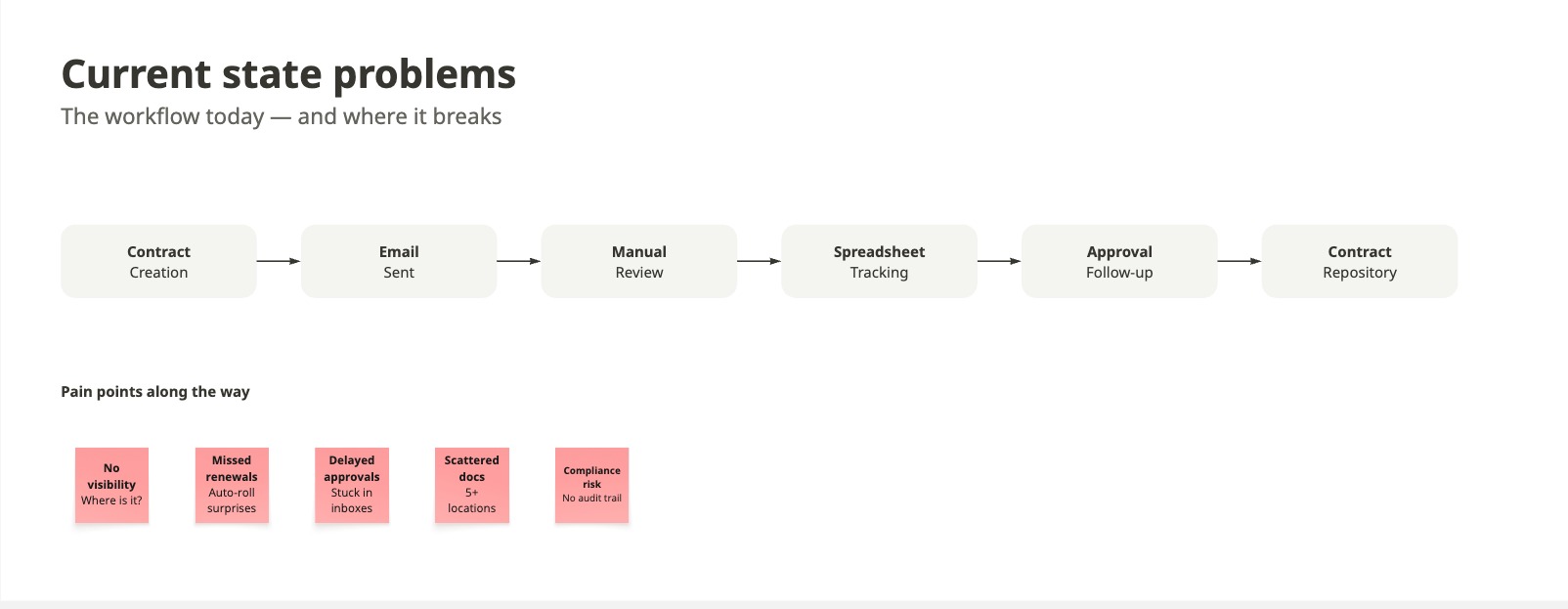
Pain PointsBefore introducing the smartContract CLM system:
- Contracts were scattered across multiple tools
- Approval processes lacked transparency
- Users tracked status manually
- Teams relied on email reminders
- Governance visibility was limited
How might we transform contracts from static documents into structured workflows that improve visibility, collaboration, and governance?
System Architecture
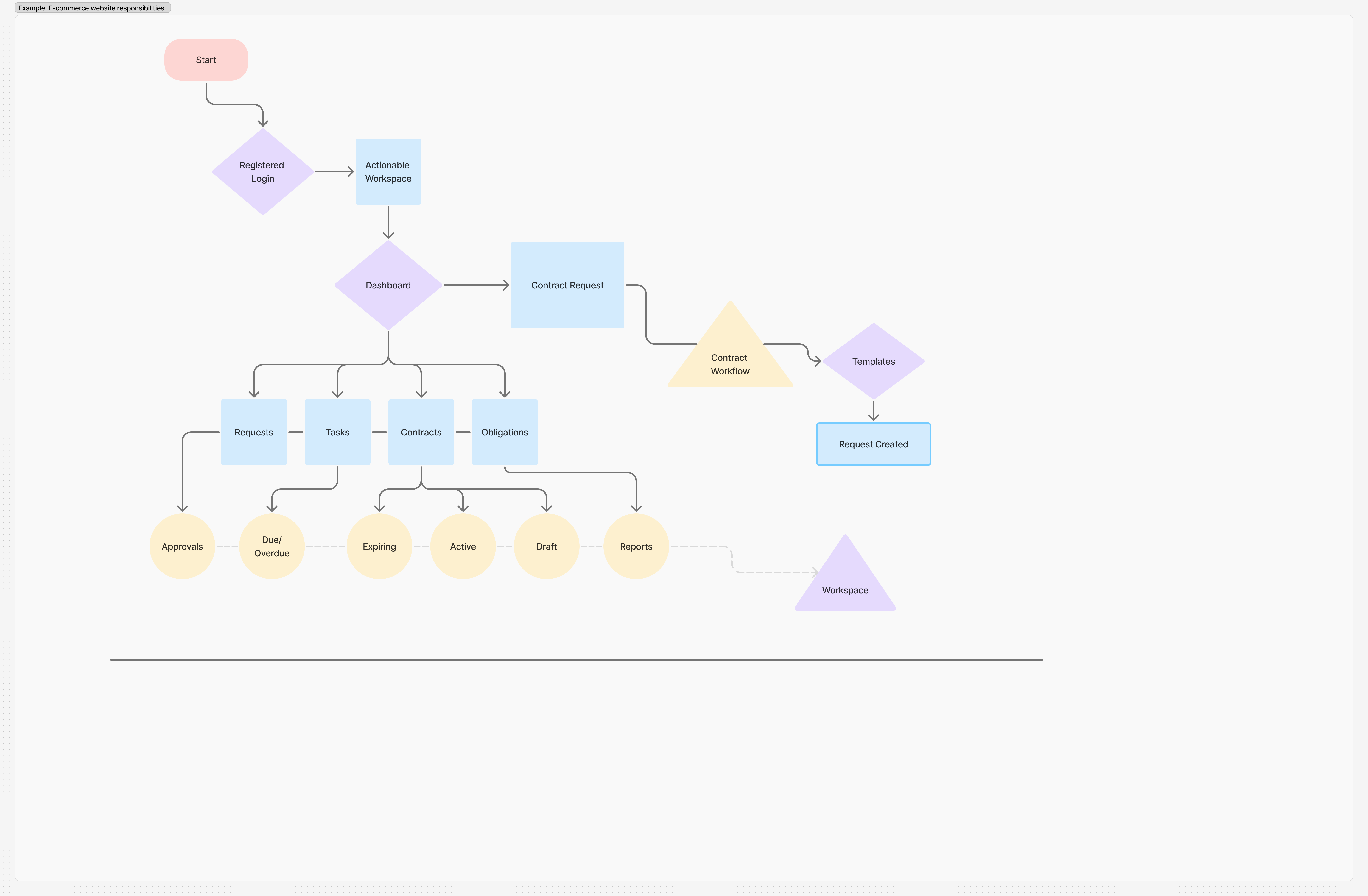
Information StructureThe platform was designed around modular enterprise components. This helped users understand where they are in the lifecycle and what actions matter next.
Core Modules
- Dashboard — overview of contracts, alerts, and activity
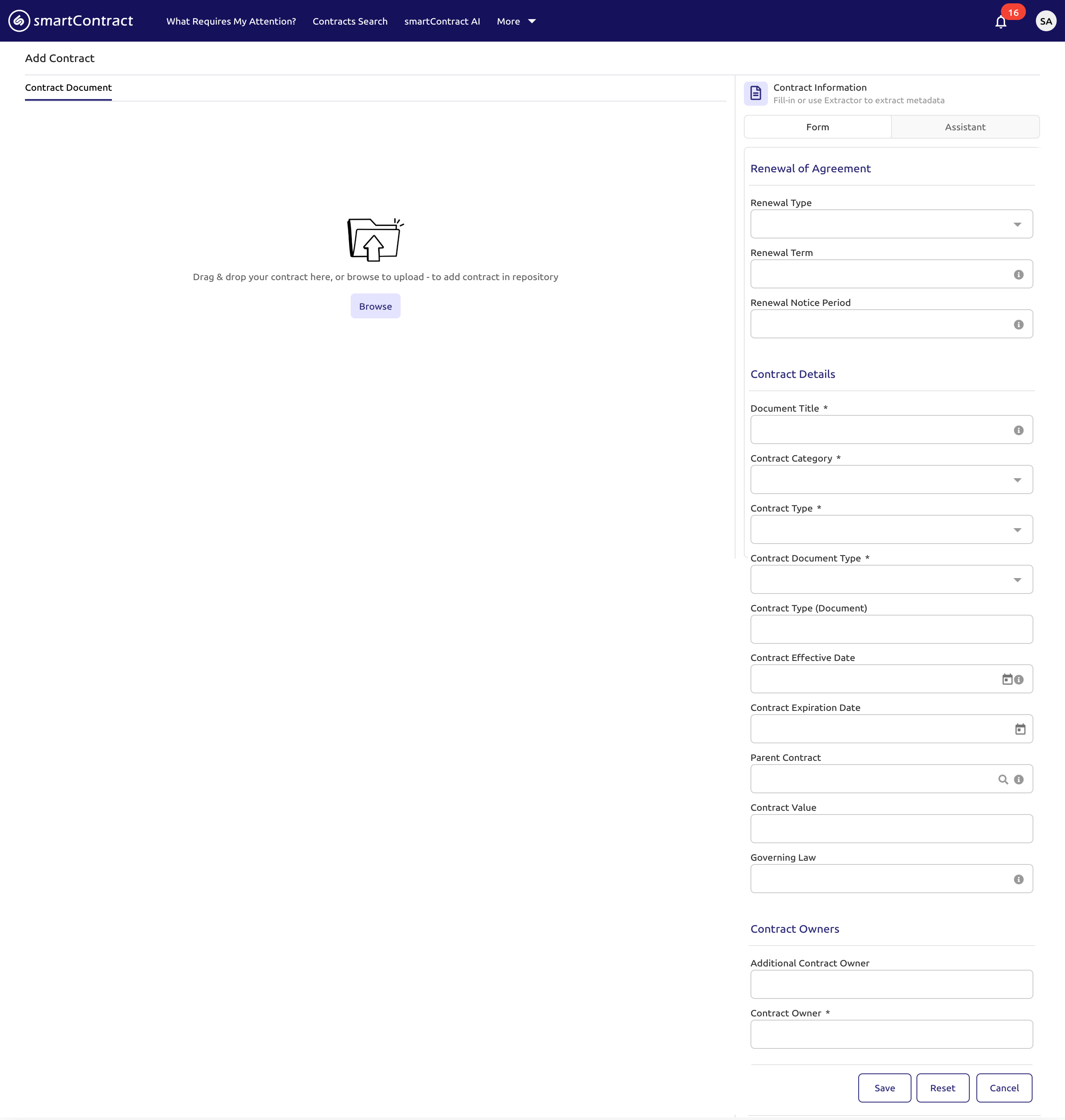
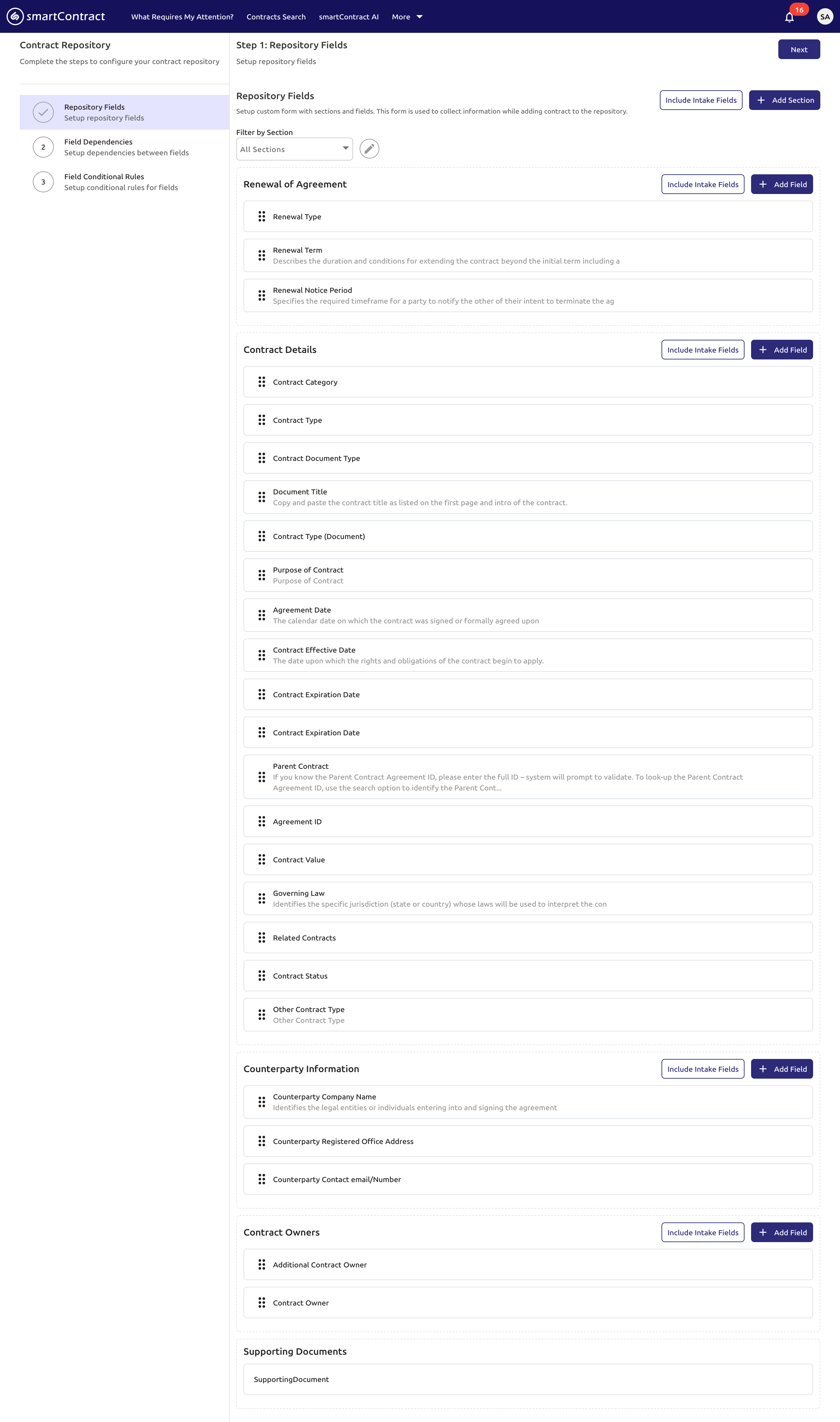
- Contract Workspace — create and manage contract details
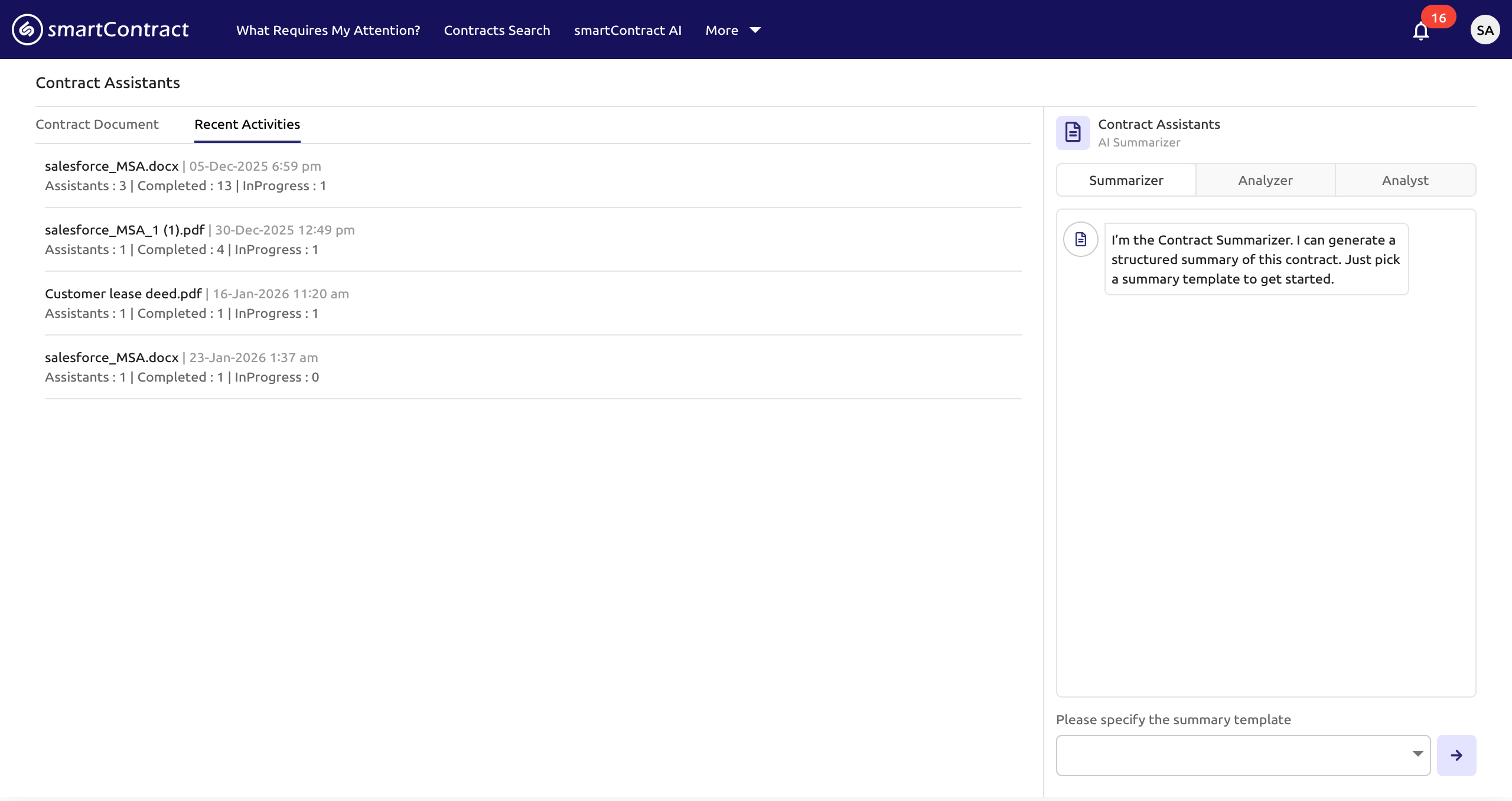
- Workflow Engine — approval routing and lifecycle progression
- Obligation Tracking — milestones and compliance monitoring
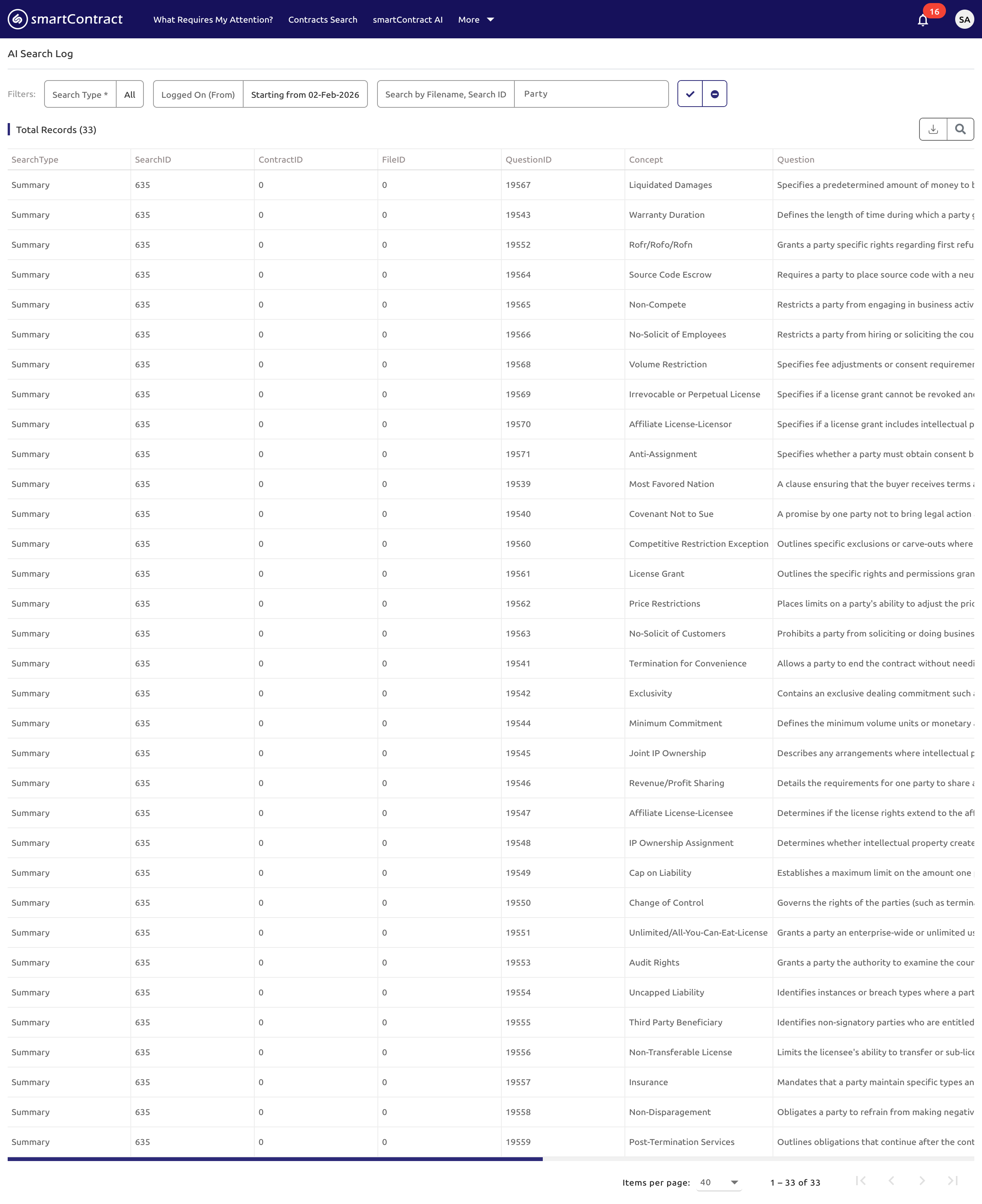
- Governance Analytics — risk and performance insights
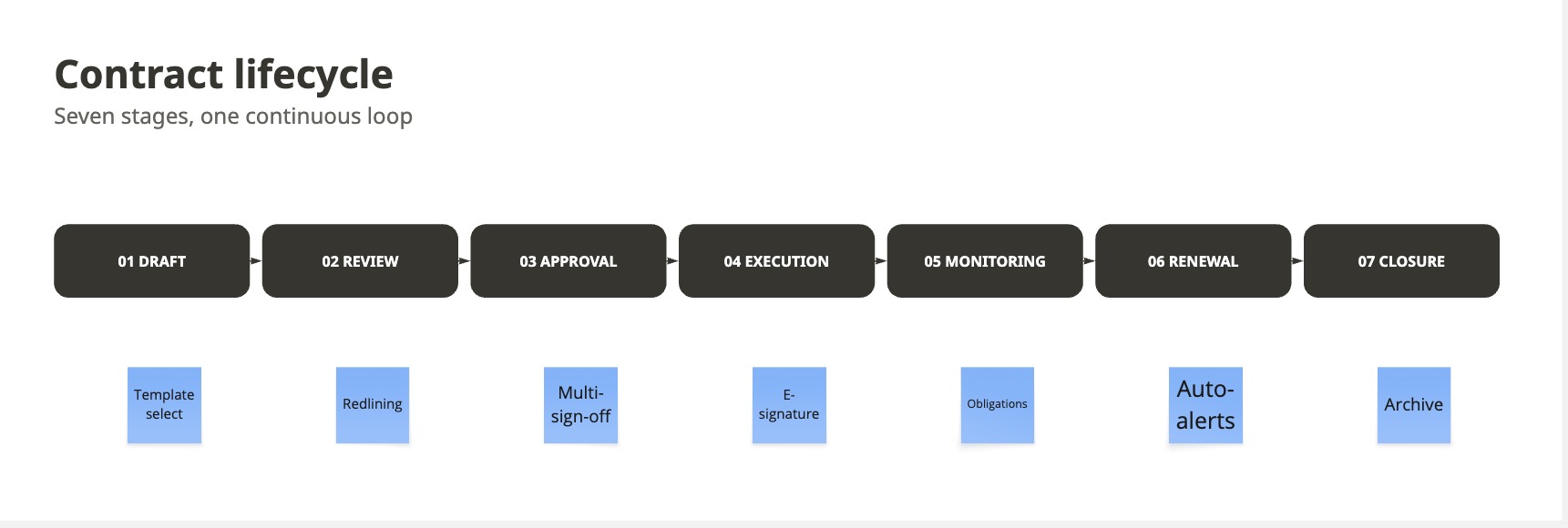
Contract Lifecycle Model
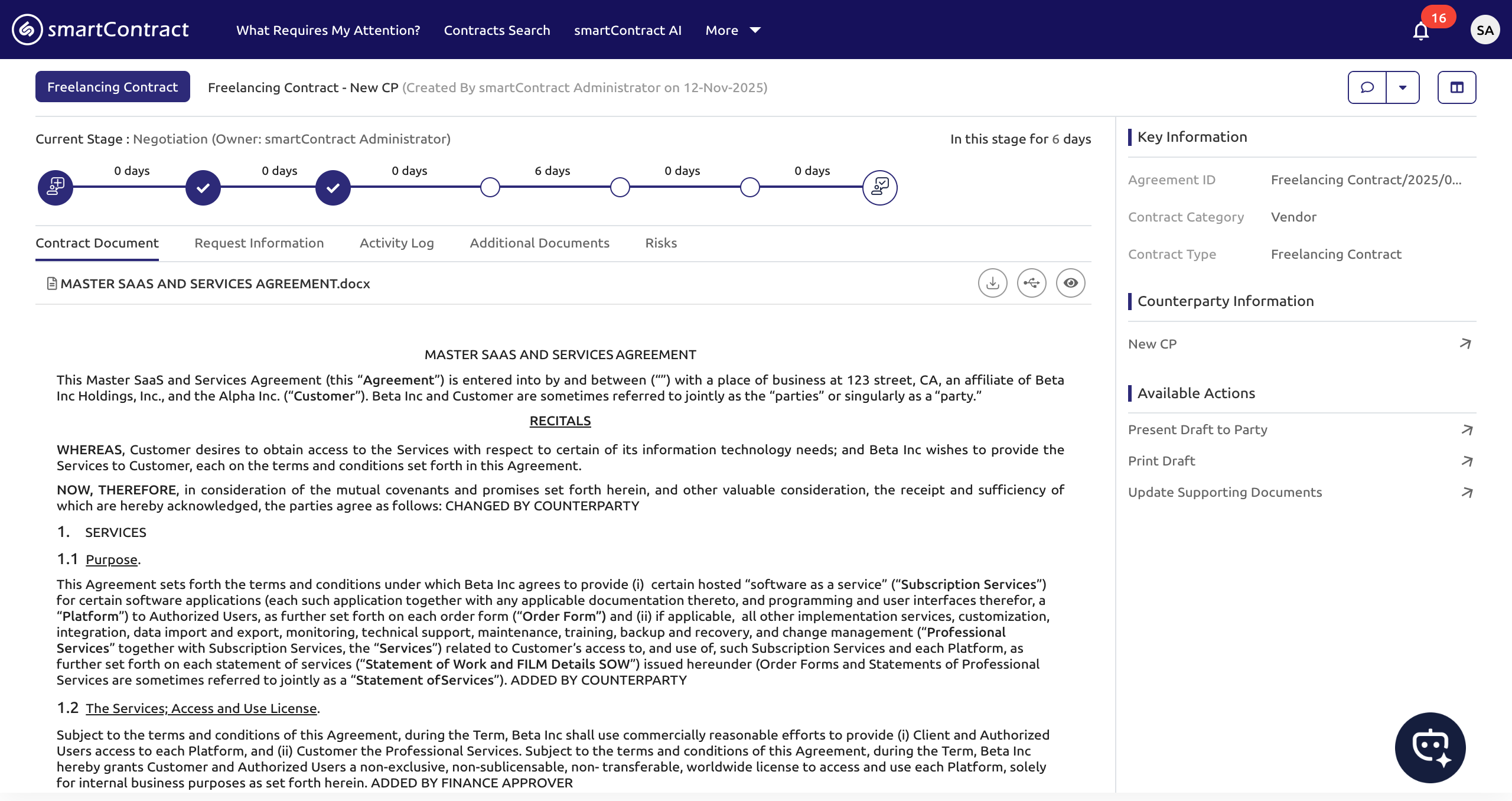
The system organizes contracts into a clear lifecycle:
Key UX Decisions
Design StrategyWorkflow-First Design
Instead of treating contracts as files, each contract was designed as a structured workflow with defined stages.
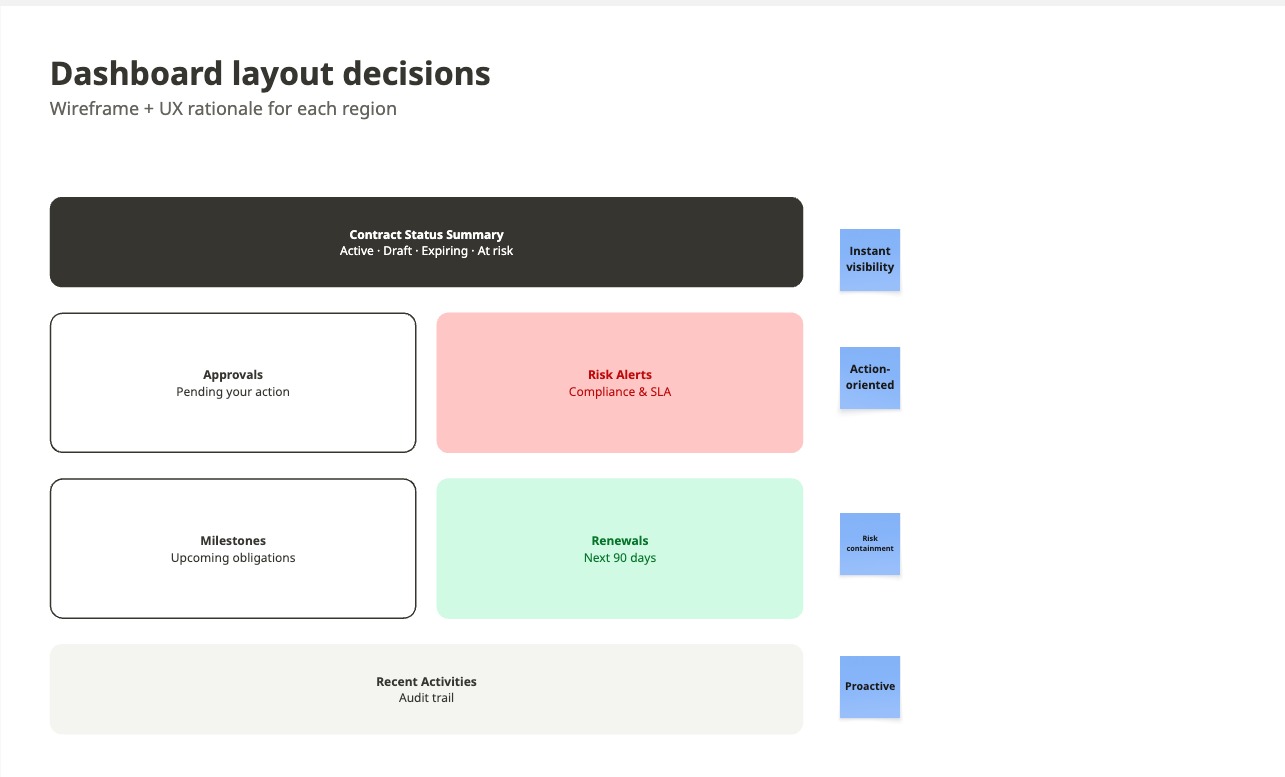
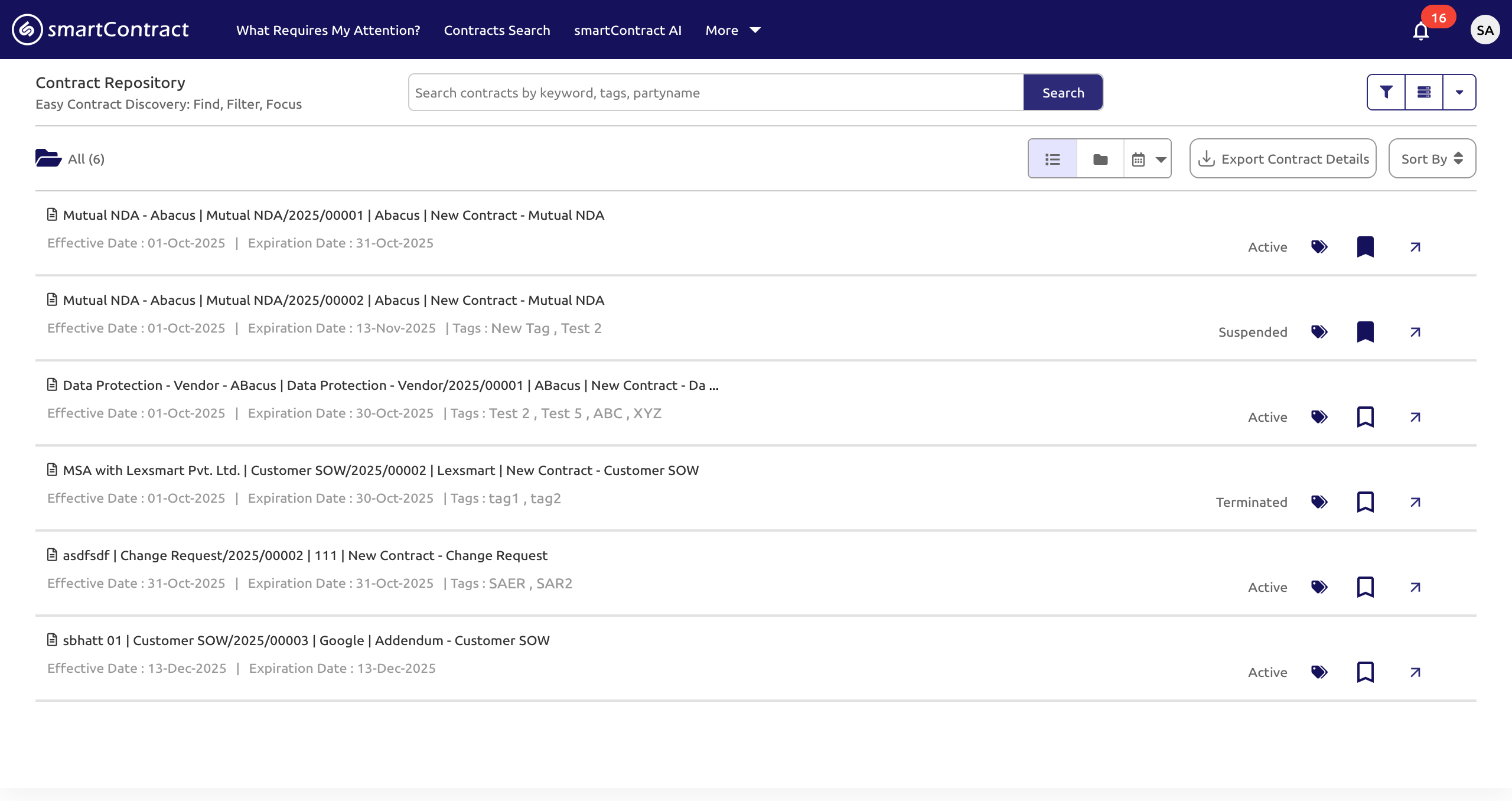
Role-Based Dashboards
Each stakeholder sees only relevant information, including pending actions, legal risk indicators, and milestone visibility.
Timeline-Based Visualization
Lifecycle progress is shown visually to reduce cognitive load and improve status understanding.
Contextual Actions
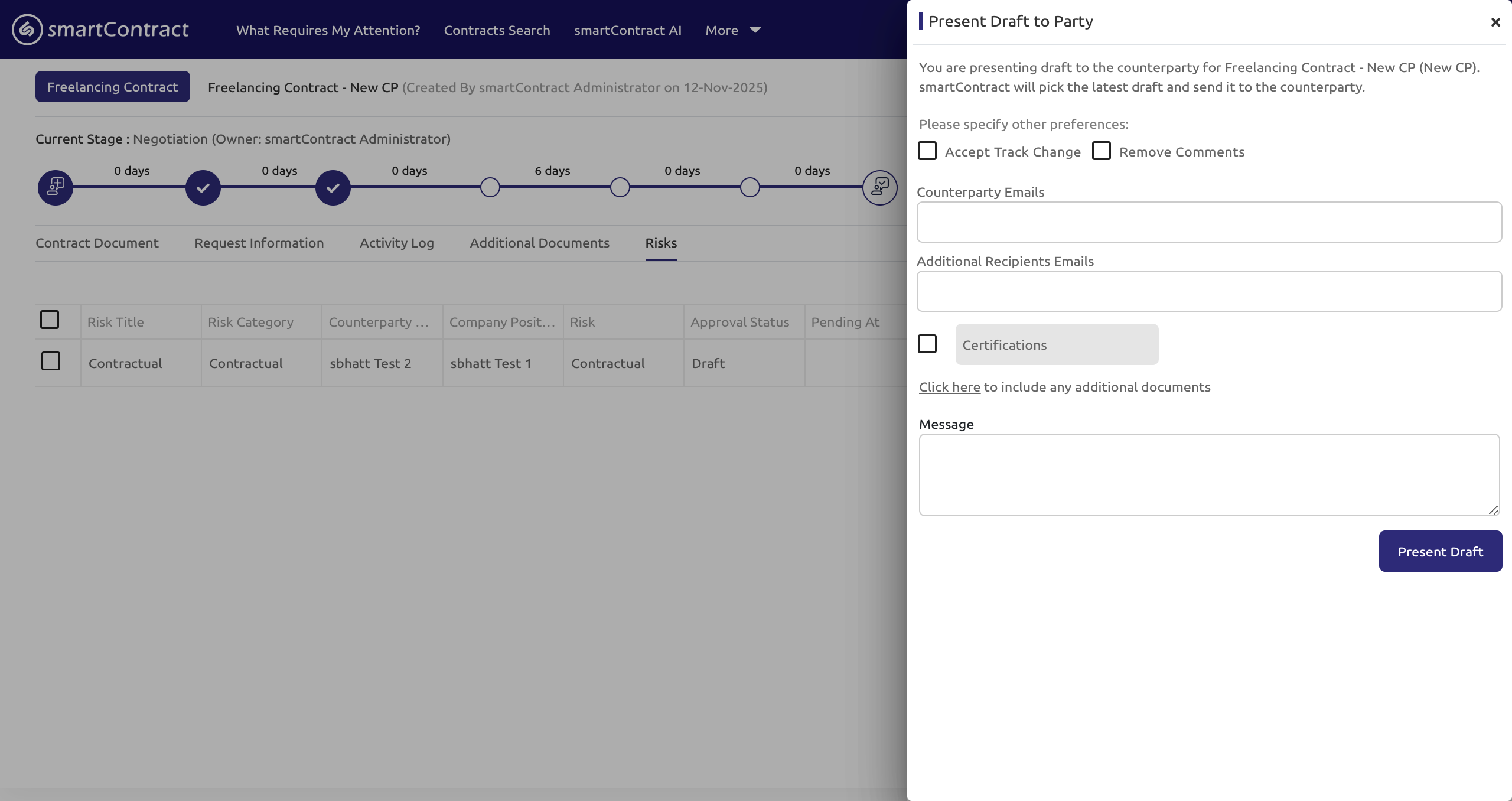
Users receive only relevant actions based on contract state, minimizing decision friction.
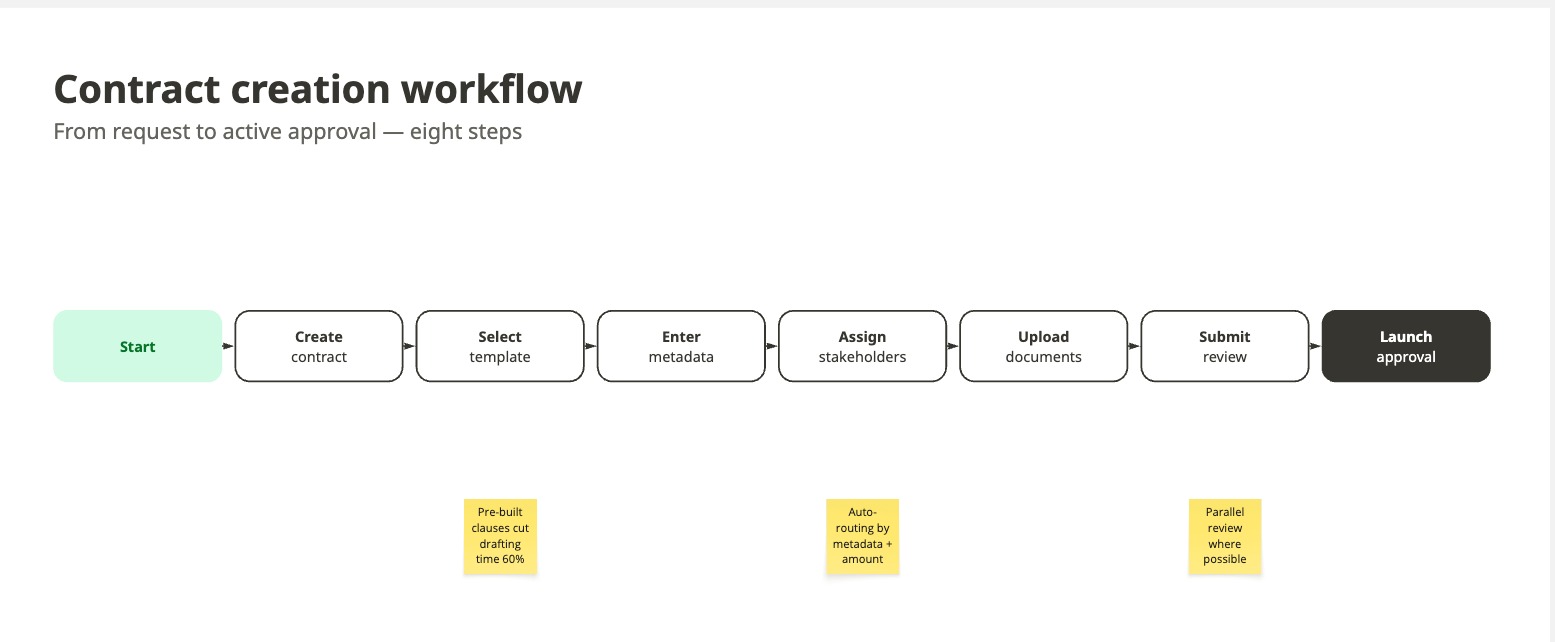
Key User Flows
Interaction DesignDesign Goals
- Reduce manual errors
- Provide structured input
- Support reusable templates
Design Benefit
- Clarify ownership
- Show transparency in approval chain
- Prevent missed deadlines
Visuals
Artifacts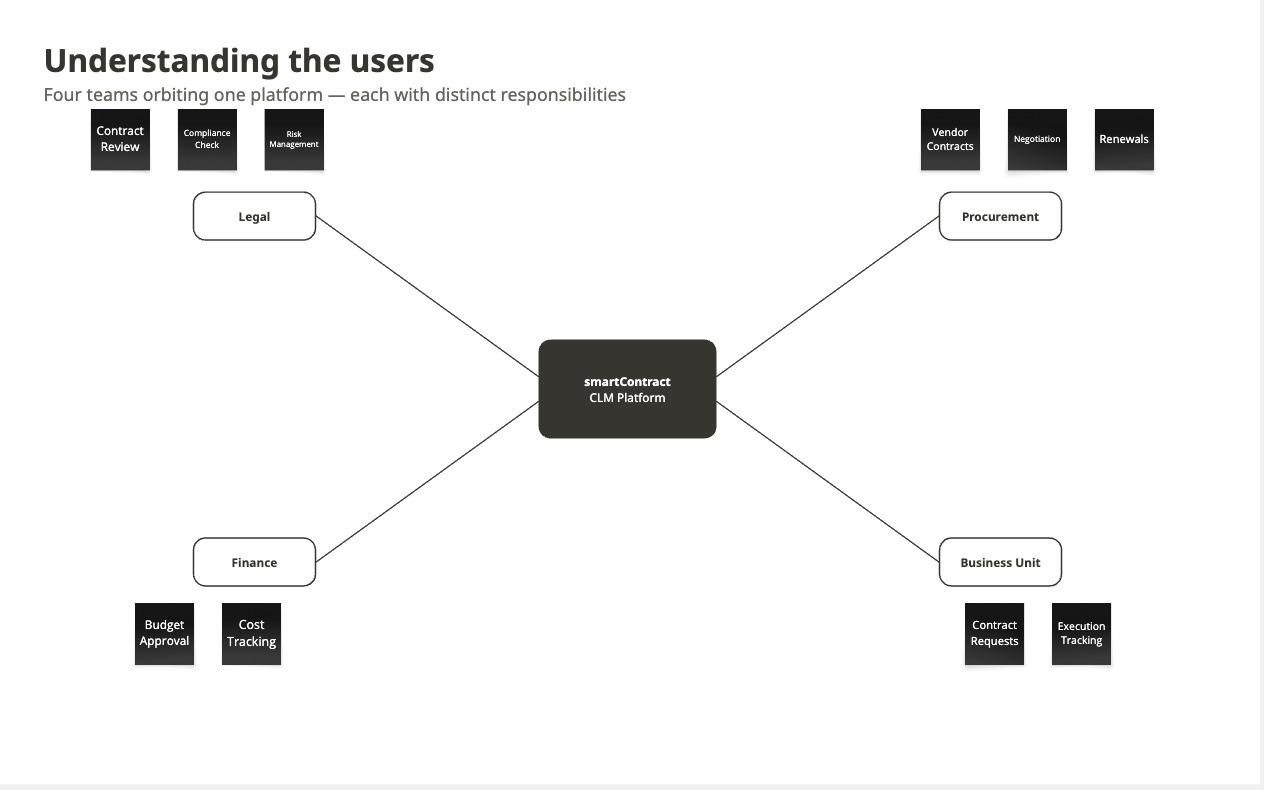
Design Challenges & Tradeoffs
ConstraintsFlexibility vs simplicity, automation vs user control, and legal precision vs usability. The design decisions prioritized clarity and structured workflows while maintaining adaptability.
Solutions
Visuals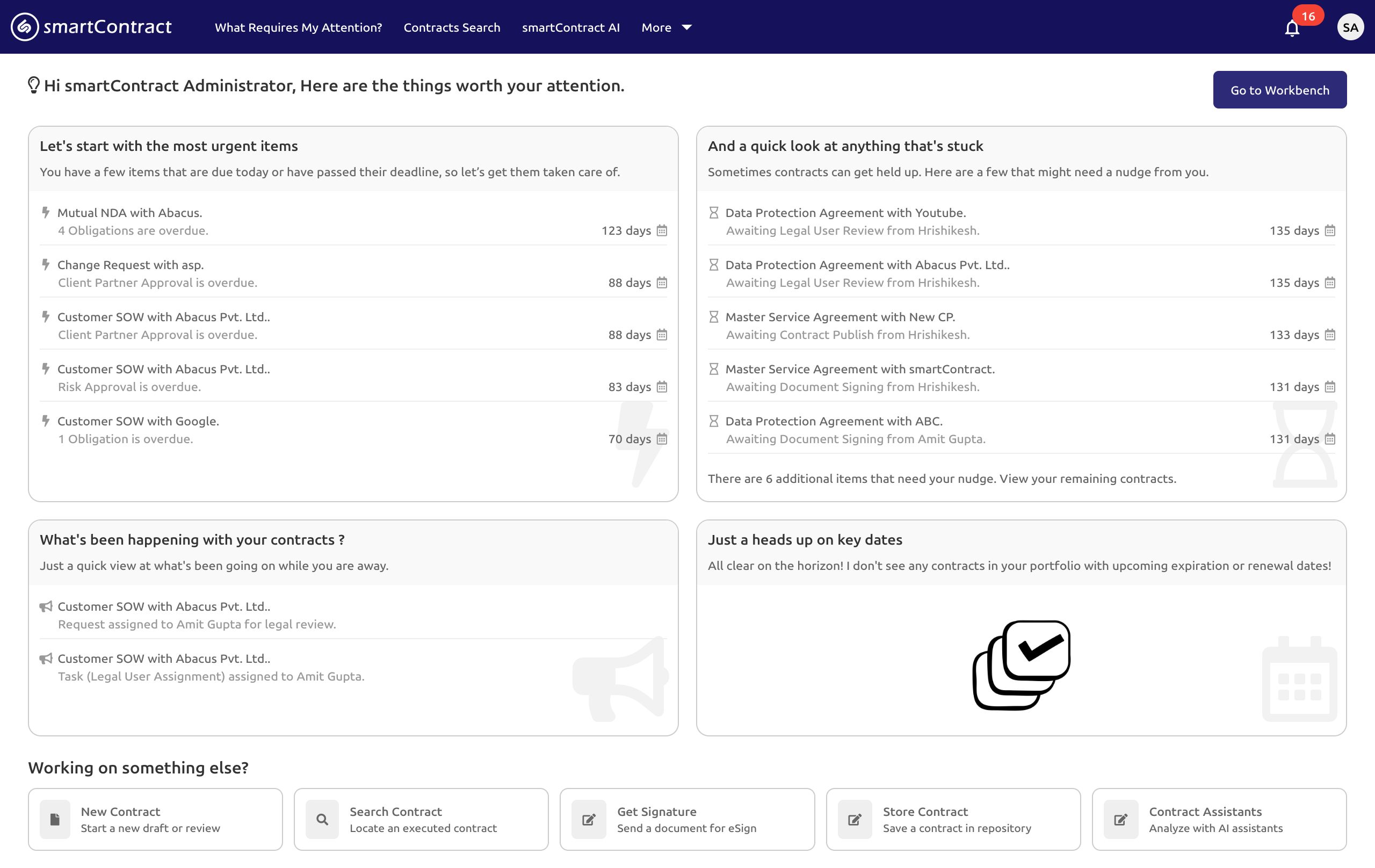
Expected Impact
OutcomesProduct Outcomes
Improved lifecycle visibility, faster approval processes, reduced manual follow-ups, and stronger compliance tracking.
Business Value
Better governance across teams, lower operational friction, more structured contract management, and a scalable workflow architecture.
Key Learnings
Reflection- Enterprise UX requires systems thinking, not screen-first design.
- Lifecycle visibility reduces organizational friction.
- Role-based design improves clarity across departments.
Future Opportunities
Next IterationsAutomation
- Assisted risk scoring
- Automated clause suggestions
- Smarter reminders and alerts
Insights
- Analytics dashboard for contract health
- Advanced reporting for legal teams
- Executive-level governance views